what does sf, sg, sh, sj, sl mean relative to oil
Automobile oils have been used up to 1998 equally the base of operations for about motorbike oils. But as the technology in cars evolved, the oils were modified to encounter those modern needs. As a result, additives were added and friction modifiers were blended with the oil. Although these modifications were positive for employ in cars, they were dissentious to motorcycles. This was especially the case with motorcycle gearboxes and clutches. Dissimilar with cars, motorcycles don't use a separate oil for the gearbox, causing the clutches to slip due to the friction modifiers. Information technology too could attribute to gearbox pitting (localised corrosion and the germination of micro-cracks). Oil in motorcycles and scooters is required to run under more than intense weather condition than in cars considering it has to endure hotter temperatures also as higher engine speed and a greater power density. These circumstances subject the oil to meaning operating stress.
In 1998 JASO T903 was introduced equally the globally recognized standard for iv-stroke motorcycle oils. It defines the required operation levels for satisfactory lubrication of the different motorcycle designs.
JASO T903 consists of two performance categories:
- JASO MA: Oils for motorcycles with a wet clutch. These oils evangelize the needed friction operation to prevent the clutch from slipping and are therefore non-friction modified. These oils can be used in 4-stroke motorcycle engines where there is i oil system in identify for the engine, gearbox and clutch. MA oils are suitable for all applications.
- JASO MB: Oils for motorcycles with an automatic transmission (scooters). These oils deliver the needed friction operation by added friction modifiers which provide fuel economic system benefits. These blazon of oils are ranged as the lowest friction oils in 4-stroke motorbike oils. MB oils should not exist used when a MA oil is required every bit they could induce clutch slippage in motorcycles and should therefore simply be used in scooters. The transmission in scooters is washed by use of belts or chains and does therefore not require any oil.
An oil is either MA or MB based on the outcome of the JASO T903 Clutch Friction test. In this examination the functioning of three friction performance areas is evaluated, making sure the oil is suitable for wet clutch applications.
- Dynamic friction: The feel of the clutch and the power transfer during clutch engagement.
- Static friction: The capacity of the torque handling and the resistance confronting slipping during breakaway conditions.
- End time: How quickly the clutch is engaging.
The main difference between JASO MA and MB is whether the oil is suitable for a moisture clutch or not.
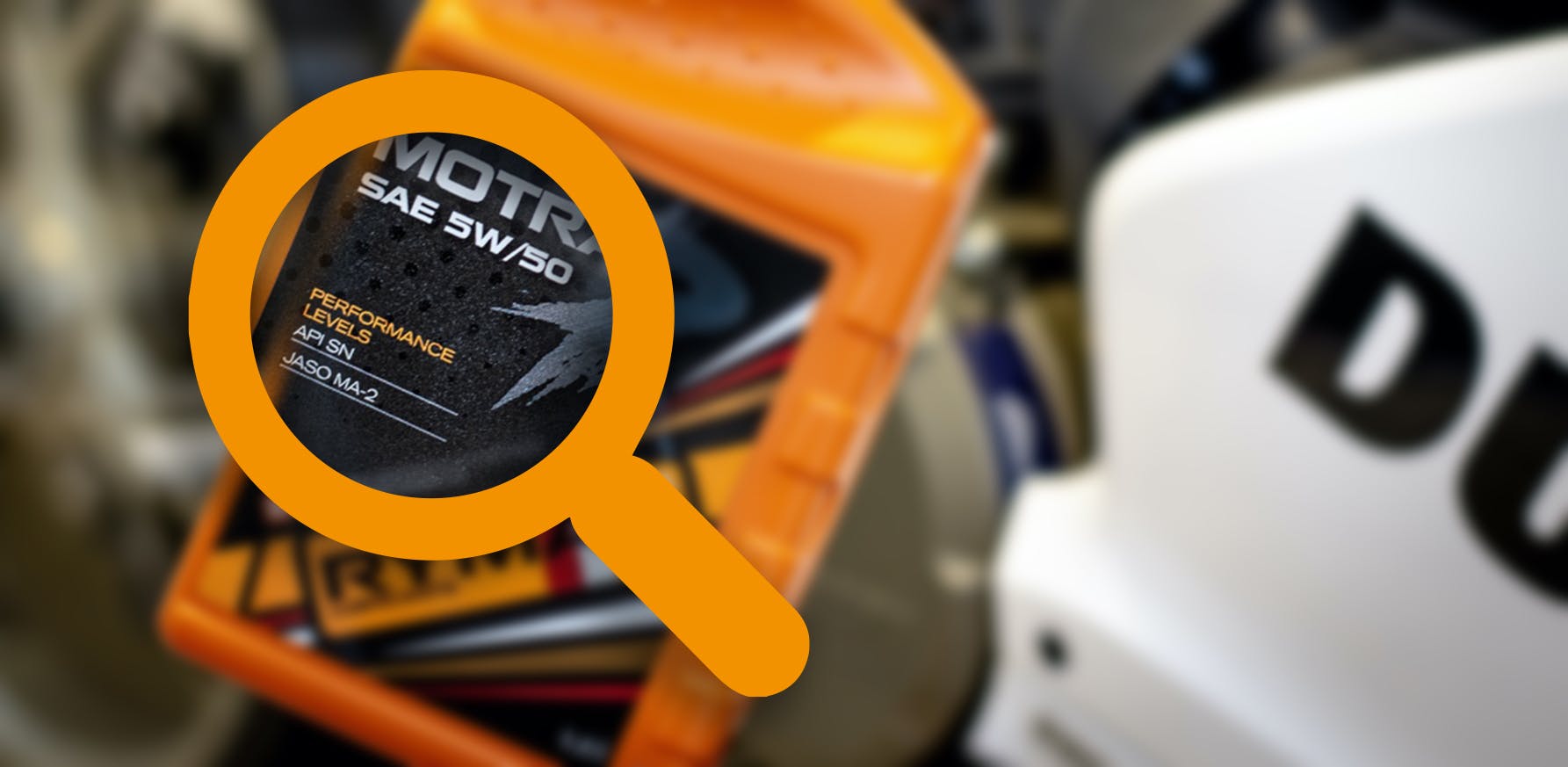
In 2006, MA1 and MA2 were added as actress categories inside the JASO MA specification. The master difference between these two categories is the higher friction operation MA2 oils are delivering. This meant that from 2006 on, motor oils that run across the T903:2006 standard can be divided into four specifications for 4-stroke motorcycle oils:
- JASO MA: This is the standard specification for oils that are used within i oil organisation (where the engine, gearbox and clutch use the same oil). These oils don't contain whatever friction modifiers.
- JASO MA1: This is a lower standard specification for motorcycles that require different oils for the engine, gearbox and clutch.
- JASO MA2: This is a college standard specification for modernistic motorcycles. These oils are suitable for apply in motorcycles that have catalytic converters in the frazzle system.
- JASO MB: This is a lower standard specification for scooter engines.
For an oil to meet whatsoever of the above mentioned JASO specifications, it has to come across at least 1 of the following quality levels:
- API SG, SH, SJ, SL, SM
- ILSAC GF-1, GF-2, GF-3
- ACEA A1/B1, A3/B3, A3/B4, A5/B5, C2, C3
Although the above motorcycle oil specifications are by far the well-nigh of import and worldwide recognised, JASO already introduced a rating system for 2-stroke oils in 1994. The tolerances of modern 2-stroke motorcycles and scooters are much smaller and likewise require an oil that generates less ash.
The JASO 2-stroke oil classifications are:
- JASO FA: This is the lowest specification that tests lubrication capability, detergency, initial torque, exhaust fume and exhaust system blocking. This specification has been officially declared obsolete in 2005 although information technology is still being used.
- JASO FB: This specification is slightly college than JASO FA and tests the same characteristics. It requires increased lubrication capability, detergency, exhaust smoke and exhaust system blocking. It corresponds with ISO Global Specification EGB.
- JASO FC: This specification requires the same results for the tests of lubrication capability and initial torque every bit JASO FB but has higher standards for detergency and exhaust smoke and exhaust system blocking. It corresponds with ISO Global Specification EGC.
- JASO FD: This specification has the aforementioned standards equally JASO FC except for a higher detergency requirement. It corresponds with ISO Global Specification EGD.
E'er check the owner'south manual to see which specification is required. If both an API and JASO MA specification are listed, make sure you selection an oil that qualifies for both specifications.
Autonomously from the above described worldwide recognised specifications JASO also divers the following (partly with API or ACEA correlating) oil specifications.
- JASO DL-1: An oil specially designed for Lite Duty Diesel Engines equipped with frazzle after treatment devices.
- JASO DH-1: A high sulphated ash oil designed for the lubrication of Heavy Duty Diesel Engines, non suitable for exhaust afterward treatment devices.
- JASO DH-two: A low sulphated ash oil designed for the lubrication of Heavy Duty Diesel Engines, particularly when equipped with exhaust after handling devices.
- JASO GLV-1: An ultra-low viscosity, fuel saving, passenger car engine oil.
- JASO 315-1A: A specification defining a Dexron Half-dozen automated transmission fluid blazon. This specification is now renamed to JASO 1-A.
Source: https://www.rymax-lubricants.com/updates/what-does-the-jaso-oil-specification-mean/
0 Response to "what does sf, sg, sh, sj, sl mean relative to oil"
Post a Comment