Configure Vscode to Connect to Server and Upload Code
Remote Development using SSH
The Visual Studio Code Remote - SSH extension allows you to open a remote folder on whatever remote machine, virtual motorcar, or container with a running SSH server and have full reward of VS Lawmaking'south characteristic set. In one case connected to a server, you can interact with files and folders anywhere on the remote filesystem.
No source lawmaking needs to be on your local machine to gain these benefits since the extension runs commands and other extensions directly on the remote automobile.

This lets VS Code provide a local-quality development experience - including total IntelliSense (completions), code navigation, and debugging - regardless of where your code is hosted.
Getting started
Note: Later on reviewing this topic, you can go started with the introductory SSH tutorial.
System requirements
Local: A supported OpenSSH uniform SSH client must as well be installed.
Remote SSH host: A running SSH server on:
- x86_64 Debian 8+, Ubuntu 16.04+, CentOS / RHEL 7+.
- ARMv7l (AArch32) Raspberry Pi Os (previously called Raspbian) Stretch/9+ (32-bit).
- ARMv8l (AArch64) Ubuntu 18.04+ (64-fleck).
- Windows x / Server 2016/2019 (1803+) using the official OpenSSH Server.
- macOS 10.14+ (Mojave) SSH hosts with Remote Login enabled.
- 1 GB RAM is required for remote hosts, but at to the lowest degree ii GB RAM and a 2-core CPU is recommended.
Other glibc based Linux distributions for x86_64, ARMv7l (AArch32), and ARMv8l (AArch64) should work if they have the needed prerequisites. Encounter the Remote Development with Linux article for information prerequisites and tips for getting community supported distributions upward and running.
While ARMv7l (AArch32) and ARMv8l (AArch64) back up is bachelor, some extensions installed on these devices may not work due to the use of x86 native code in the extension.
Installation
To get started, yous need to:
-
Install an OpenSSH compatible SSH client if 1 is non already present.
-
Install Visual Studio Code or Visual Studio Code Insiders.
-
Install the Remote Development extension pack.
SSH host setup
-
If you do non have an SSH host gear up upwardly, follow the directions for Linux, Windows 10 / Server (1803+), or macOS SSH host or create a VM on Azure.
-
[Optional] If your Linux or macOS SSH host volition exist accessed past multiple users at the aforementioned time, consider enabling Remote.SSH: Remote Server Listen On Socket in VS Code User settings for improved security.
In the Settings editor:

See the Tips and Tricks article for details.
-
[Optional] While password-based authentication is supported, we recommend setting upwards fundamental based authentication for your host. See the Tips and Tricks article for details.
Connect to a remote host
To connect to a remote host for the first time, follow these steps:
-
Verify you can connect to the SSH host past running the following command from a terminal / PowerShell window replacing
user@hostnameevery bit appropriate.ssh user@hostname # Or for Windows when using a domain / AAD business relationship ssh user@domain@hostname -
In VS Lawmaking, select Remote-SSH: Connect to Host... from the Control Palette (F1, ⇧⌘P (Windows, Linux Ctrl+Shift+P)) and utilise the same
user@hostnameevery bit in step 1.
-
If VS Code cannot automatically detect the blazon of server you are connecting to, you lot volition be asked to select the type manually.

In one case y'all select a platform, it will be stored in VS Code settings nether the
remote.SSH.remotePlatformproperty so yous can change it at any time. -
After a moment, VS Code will connect to the SSH server and set itself up. VS Code will keep you up-to-appointment using a progress notification and you can run across a detailed log in the
Remote - SSHoutput aqueduct.Tip: Connection hanging or failing? See troubleshooting tips for information on resolving common problems.
If you encounter errors about SSH file permissions, run across the section on Fixing SSH file permission errors.
-
After you are connected, you lot'll be in an empty window. You tin ever refer to the Condition bar to see which host yous are connected to.
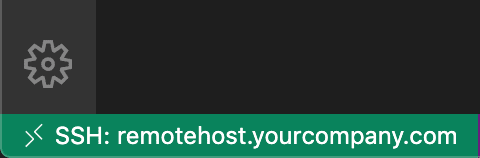
Clicking on the Condition bar item will provide a list of remote commands while you are continued.
-
Y'all tin can then open whatever folder or workspace on the remote machine using File > Open up... or File > Open up Workspace... just as y'all would locally!
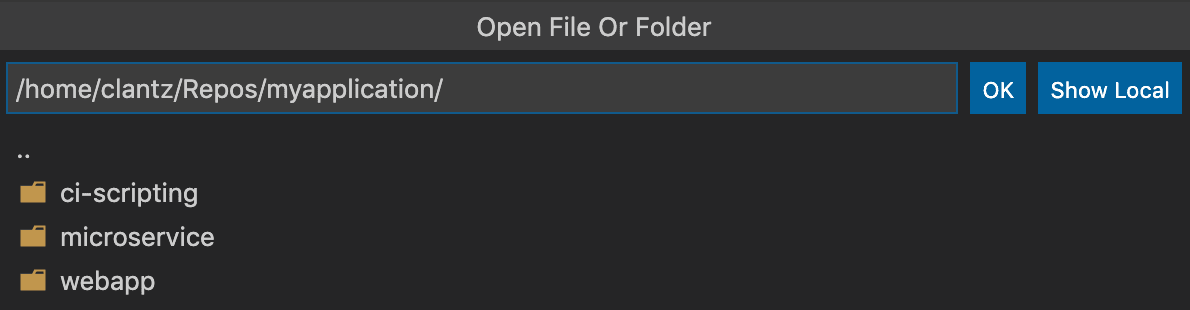
From hither, install any extensions you want to use when connected to the host and get-go editing!
Note: On ARMv7l / ARMv8l
glibcSSH hosts, some extensions may not work due to x86 compiled native code inside the extension.
Open a binder on a remote SSH host in a container
If you are using a Linux or macOS SSH host, yous can use the Remote - SSH and Remote - Containers extensions together to open a folder on your remote host inside of a container. Y'all do not even need to have a Docker client installed locally.
To practice so:
- Follow the installation steps for the Remote - Containers extension on your remote host.
- [Optional] Prepare up SSH key based authentication to the server so y'all exercise non demand to enter your countersign multiple times.
- Follow the quick get-go for the Remote - SSH extension to connect to a host and open up a folder there.
- Use the Remote-Containers: Reopen in Container command from the Command Palette (F1, ⇧⌘P (Windows, Linux Ctrl+Shift+P)).
The rest of the Remote - Containers quick get-go applies as-is. You lot can larn more than about the Remote - Containers extension in its documentation. Yous tin too see the Develop on a remote Docker host article for other options if this model does not see your needs.
Disconnect from a remote host
To close the connectedness when you finish editing files on the remote host, cull File > Close Remote Connexion to disconnect from the host. The default configuration does not include a keyboard shortcut for this command. You can likewise only exit VS Lawmaking to shut the remote connection.
Retrieve hosts and advanced settings
If you accept a set of hosts you apply oft or you lot need to connect to a host using some additional options, you can add them to a local file that follows the SSH config file format.
To make setup like shooting fish in a barrel, the extension can guide you through adding a host without having to manus edit this file.
Start past selecting Remote-SSH: Add together New SSH Host... from the Command Palette (F1, ⇧⌘P (Windows, Linux Ctrl+Shift+P)) or clicking on the Add New icon in the SSH Remote Explorer in the Activity Bar.
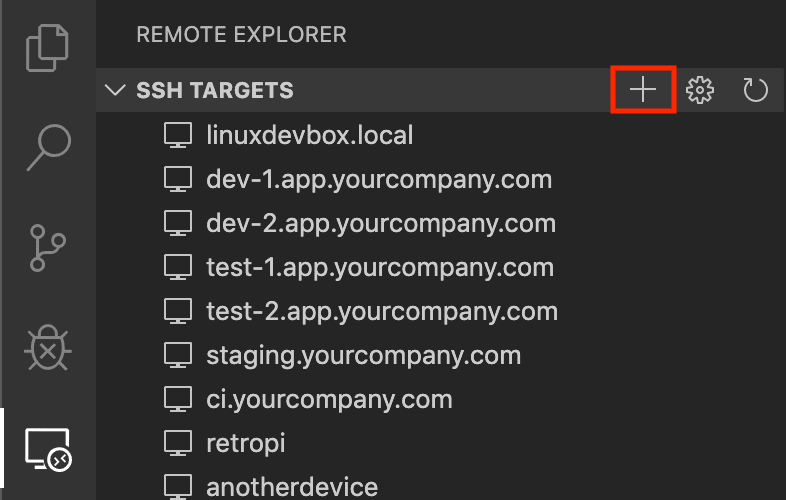
Yous'll and then exist asked to enter the SSH connexion information. Yous tin can either enter a host proper name:

Or the total ssh command yous would use to connect to the host from the command line:

Finally, you'll be asked to pick a config file to utilise. You lot tin can also set the "remote.SSH.configFile" property in your User settings.json file if you want to utilise a different config file than those listed. The extension takes care of the rest!
For instance, entering ssh -i ~/.ssh/id_rsa-remote-ssh yourname@remotehost.yourcompany.com in the input box would generate this entry:
Host remotehost.yourcompany.com User yourname HostName another-host-fqdn-or-ip-goes-here IdentityFile ~/.ssh/id_rsa-remote-ssh Run across Tips and Tricks for details on generating the key shown here. You can manually edit this file with anything the SSH config file format supports, and so this is just one case.
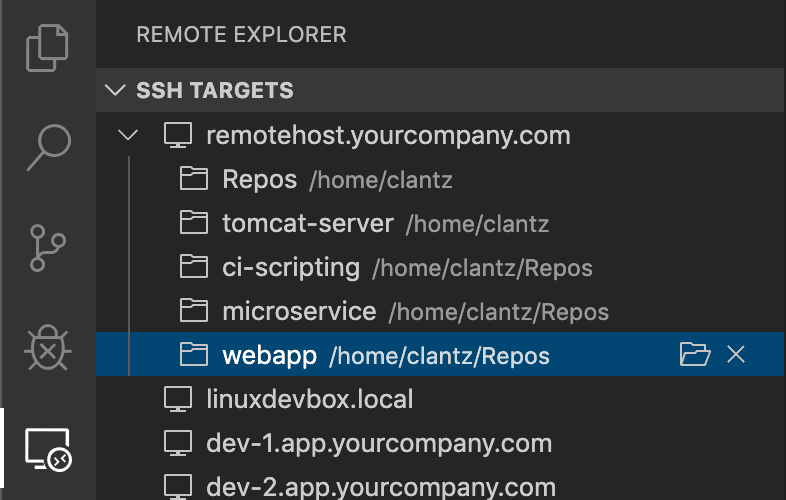
From this betoken forward, the host will appear in the list of hosts when you lot select Remote-SSH: Connect to Host... from the Command Palette (F1, ⇧⌘P (Windows, Linux Ctrl+Shift+P)) or in the SSH Targets section of the Remote Explorer.
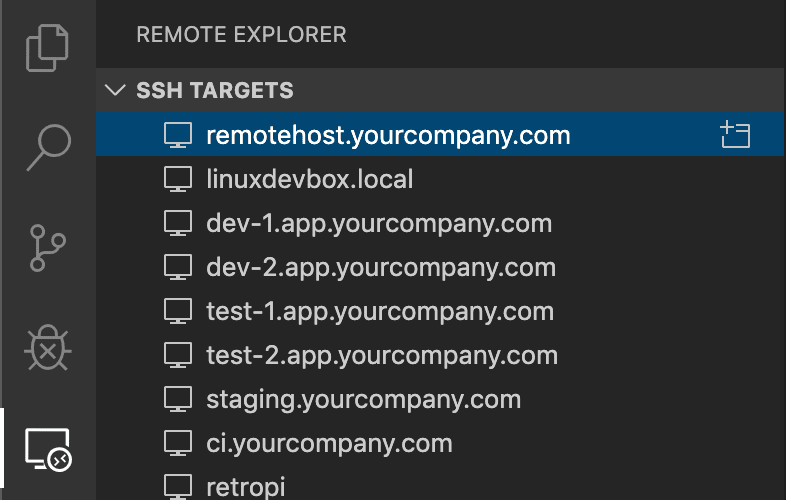
The Remote Explorer allows yous to both open a new empty window on the remote host or directly open up a folder you previously opened. Expand the host and click on the Open up Folder icon next to the binder you want to open on the host.
Managing extensions
VS Code runs extensions in one of ii places: locally on the UI / client side, or remotely on the SSH host. While extensions that affect the VS Code UI, similar themes and snippets, are installed locally, about extensions will reside on the SSH host. This ensures you have polish experience and allows you to install any needed extensions for a given workspace on an SSH host from your local machine. This way, you can selection up exactly where you left off, from a unlike machine complete with your extensions.
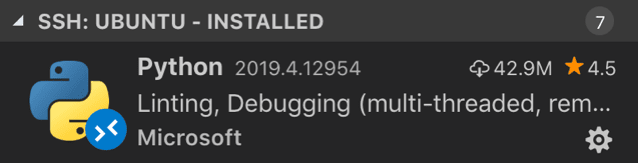
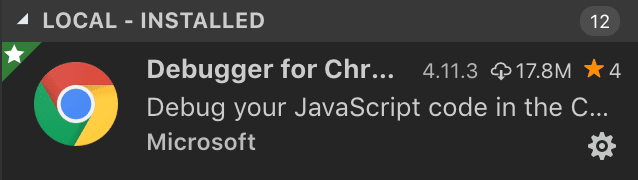
If you install an extension from the Extensions view, information technology will automatically be installed in the right location. Once installed, you lot can tell where an extension is installed based on the category group.
There volition be a category for your remote SSH host:
And also a Local - Installed category:
Note: If you are an extension author and find that your extension is not working properly or installs in the wrong place, meet Supporting Remote Evolution for details.
Local extensions that actually need to run remotely will announced dimmed and disabled in the Local - Installed category. Select Install to install an extension on your remote host.
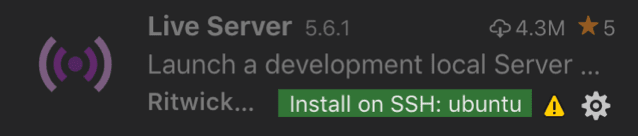
Yous can besides install all locally installed extensions on the SSH host by going to the Extensions view and selecting Install Local Extensions in SSH: [Hostname] using the cloud button at the right of the Local - Installed title bar. This will brandish a dropdown where you can select which locally installed extensions to install on your SSH host.
"Always installed" extensions
If there are extensions that you would like to always accept installed on whatsoever SSH host, you can specify which ones using the remote.SSH.defaultExtensions property in settings.json. For example, if you wanted to install the GitLens and Resource Monitor extensions, specify their extension IDs equally follows:
"remote.SSH.defaultExtensions" : [ "eamodio.gitlens" , "mutantdino.resourcemonitor" ] Advanced: Forcing an extension to run locally / remotely
Extensions are typically designed and tested to either run locally or remotely, not both. However, if an extension supports it, y'all can force it to run in a particular location in your settings.json file.
For instance, the setting beneath volition force the Docker extension to run locally and Debugger for Chrome extension to run remotely instead of their defaults:
"remote.extensionKind" : { "ms-azuretools.vscode-docker" : [ "ui" ], "msjsdiag.debugger-for-chrome" : [ "workspace" ] } A value of "ui" instead of "workspace" will force the extension to run on the local UI/client side instead. Typically, this should merely exist used for testing unless otherwise noted in the extension'south documentation since it tin break extensions. See the article on Supporting Remote Evolution for details.
Forwarding a port / creating SSH tunnel
Sometimes when developing, you may demand to admission a port on a remote motorcar that is non publicly exposed. In that location are two ways to do this using an SSH tunnel that "forward" the desired remote port to your local machine.
Temporarily forwarding a port
Once you are connected to a host, if yous desire to temporarily forward a new port for the duration of the session, select Forward a Port from the Control Palette (F1, ⇧⌘P (Windows, Linux Ctrl+Shift+P)) or click on the Forward New Port icon in the Remote Explorer after selecting information technology from the Activity Bar.

You'll exist asked to enter the port yous would like to forward and y'all can give it a proper name.

A notification will tell y'all the localhost port you should use to access the remote port. For example, if you forwarded an HTTP server listening on port 3000, the notification may tell you that it was mapped to port 4123 on localhost since 3000 was already in use. Yous tin then connect to this remote HTTP server using http://localhost:4123.
This same information is available in the Forwarded Ports section of the Remote Explorer if yous need to admission it later.
If you would like VS Code to think any ports yous have forwarded, check Remote: Restore Forwarded Ports in the Settings editor ( ⌘, (Windows, Linux Ctrl+,)) or set "remote.restoreForwardedPorts": true in settings.json.

Modify local port on tunnel
If y'all would like the local port of the tunnel to be unlike than the remote server's, you can change this via the Forwarded Ports panel.
Right-click the tunnel you want to modify, and select Change Local Port in the context menu.

Always forwarding a port
If you have ports that you lot e'er want to forwards, you tin can utilise the LocalForward directive in the same SSH config file you use to call up hosts and advanced settings.
For example, if you wanted to forwards ports 3000 and 27017, you could update the file as follows:
Host remote-linux-automobile User myuser HostName remote-linux-machine.mydomain LocalForward 127.0.0.1:3000 127.0.0.1:3000 LocalForward 127.0.0.1:27017 127.0.0.i:27017 Opening a terminal on a remote host
Opening a terminal on the remote host from VS Code is elementary. One time connected, any terminal window you open in VS Code (Last > New Final) will automatically run on the remote host rather than locally.
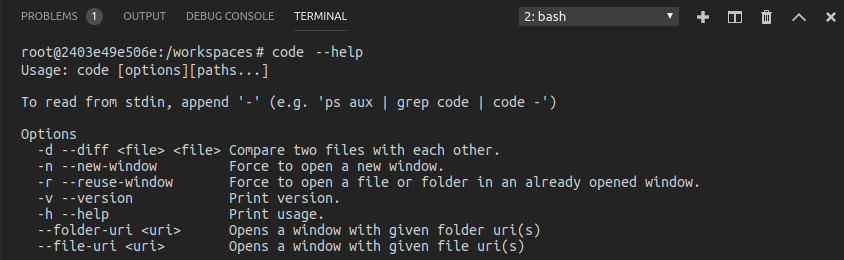
You tin also apply the code command line from this aforementioned terminal window to perform a number of operations such as opening a new file or folder on the remote host. Type code --aid to see all the options available from the control line.
Debugging on the SSH host
Once you lot are connected to a remote host, you can use VS Code's debugger in the same mode you lot would when running the application locally. For instance, if you select a launch configuration in launch.json and start debugging ( F5 ), the application will start on remote host and attach the debugger to information technology.
Come across the debugging documentation for details on configuring VS Lawmaking's debugging features in .vscode/launch.json.
SSH host-specific settings
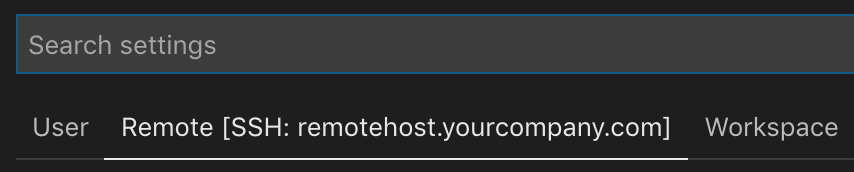
VS Lawmaking'due south local User settings are also reused when yous are connected to an SSH host. While this keeps your user experience consistent, you may want to vary some of these settings betwixt your local machine and each host. Fortunately, once you have connected to a host, yous can also set host-specific settings by running the Preferences: Open up Remote Settings control from the Command Palette (F1, ⇧⌘P (Windows, Linux Ctrl+Shift+P)) or by selecting on the Remote tab in the Settings editor. These will override any User settings you lot have in place whenever you connect to the host. And Workspace settings will override Remote and User settings.
The Remote - SSH extension does non provide straight support for sync'ing source code or using local tools with content on a remote host. Withal, there are two ways to do this using common tools that will piece of work with virtually Linux hosts. Specifically, you can:
- Mount the remote filesystem using SSHFS.
- Sync files to/from the remote host to your local car using
rsync.
SSHFS is the almost convenient option and does not require whatsoever file sync'ing. However, performance will be significantly slower than working through VS Code, and so it is all-time used for single file edits and uploading/downloading content. If you need to employ an application that bulk reads/write to many files at once (like a local source control tool), rsync is a better choice.
Known limitations
Remote - SSH limitations
- Using key based authentication is recommended. Passwords and other tokens entered for alternate hallmark methods are not saved.
- Alpine Linux and not-glibc based Linux SSH hosts are non supported.
- Older (community supported) Linux distributions require workarounds to install the needed prerequisites.
- PuTTY is not supported on Windows.
- If you clone a Git repository using SSH and your SSH key has a passphrase, VS Code's pull and sync features may hang when running remotely. Either employ an SSH central without a passphrase, clone using HTTPS, or run
git pushfrom the command line to work around the outcome. - Local proxy settings are not reused on the remote host, which can foreclose extensions from working unless the appropriate proxy data is configured on the remote host (for example global
HTTP_PROXYorHTTPS_PROXYenvironment variables with the appropriate proxy data). - You cannot use Remote - Containers from a Remote - SSH connection to a Windows machine.
- See hither for a list of active bug related to SSH.
Docker Extension limitations
If you are using the Docker or Kubernetes extension in a Remote - SSH window, you will not be able to use the correct-click Attach VS Code to Container selection. This will but work if you lot are using it from your local car.
Extension limitations
Many extensions will work on remote SSH hosts without modification. Notwithstanding, in some cases, sure features may crave changes. If you run into an extension issue, there is a summary of common problems and solutions that you can mention to the extension author when reporting the result.
In addition, some extensions installed on ARMv7l (AArch322) / ARMv8l (AArch64) devices may not work due to native modules or runtimes in the extension that only back up x86_64. In these cases, the extensions would need to opt-in to supporting these platforms by compiling / including binaries for ARMv7l / ARMv8l.
Common questions
How practise I gear up an SSH client on ...?
Come across Installing a supported SSH customer for details.
How do I ready an SSH server on ...?
Meet Installing a supported SSH server for details on setting upwardly an SSH server for your host.
Can I sign in to my SSH server with another/additional authentication mechanism like a password?
Aye, you should be prompted to enter your token or password automatically. Notwithstanding, passwords are non saved, then using key based hallmark is typically more than user-friendly.
How do I ready SSH errors about "bad permissions"?
Run across Fixing SSH file permission errors for details on resolving these types of errors.
What Linux packages / libraries need to be installed on remote SSH hosts?
Almost Linux distributions volition not require additional dependency installation steps. For SSH, Linux hosts need to have Bash (/bin/bash), tar, and either curl or wget installed and those utilities could exist missing from certain stripped down distributions. Remote Development likewise requires kernel >= 3.10, glibc >=2.17, libstdc++ >= iii.4.18. Only glibc-based distributions are supported currently, so by extension Alpine Linux is not supported.
See Linux Prerequisites for details.
What are the connectivity requirements for the VS Code Server when it is running on a remote machine / VM?
Installation of VS Code Server requires that your local machine has outbound HTTPS (port 443) connectivity to:
-
update.code.visualstudio.com -
vscode.hulk.core.windows.net -
*.vo.msecnd.net(Azure CDN)
By default, the Remote - SSH will attempt to download on the remote host, merely if y'all enable remote.SSH.allowLocalServerDownload, the extension volition fall dorsum to downloading VS Code Server locally and transferring it remotely once a connection is established.
Y'all can install extensions manually without an internet connexion using the Extensions: Install from VSIX... command, but if yous use the extension console to install extensions, your local motorcar and VS Code Server server will need outbound HTTPS (port 443) access to:
-
marketplace.visualstudio.com -
*.vo.msecnd.net(Azure CDN) -
*.gallerycdn.vsassets.io(Azure CDN)
Finally, some extensions (like C#) download secondary dependencies from download.microsoft.com or download.visualstudio.microsoft.com. Others (like Visual Studio Live Share) may accept additional connectivity requirements. Consult the extension's documentation for details if y'all run into trouble.
All other communication between the server and the VS Code client is accomplished through the authenticated, secure SSH tunnel.
Can I apply local tools on source lawmaking sitting on the remote SSH host?
Yeah. Typically this is washed using SSHFS or by using rsync to get a re-create of the files on your local automobile. SSHFS mounts the remote filesystem is ideal for scenarios where you need to edit individual files or browse the source tree and requires no sync footstep to use. However, it is not ideal for using something like a source command tool that majority manages files. In this case, the rsync approach is better since you get a complete copy of the remote source lawmaking on your local machine. Run into Tips and Tricks for details.
Can I employ VS Lawmaking when I only accept SFTP/FTP filesystem access to my remote host (no crush admission)?
Some cloud platforms only provide remote filesystem access for developers rather than direct beat out access. VS Code Remote Development was non designed with this use case in mind since it negates the performance and user feel benefits.
However, this utilise example can typically be handled by combining extensions like SFTP with remote debugging features for Node.js, Python, C#, or others.
The VS Code extension API abstracts abroad local/remote details so most extensions will work without modification. However, given extensions can use any node module or runtime they desire, there are situations where adjustments may demand to exist fabricated. We recommend you lot exam your extension to exist certain that no updates are required. See Supporting Remote Development for details.
Questions or feedback
- Run across Tips and Tricks or the FAQ.
- Search on Stack Overflow.
- Add a feature request or report a problem.
- Contribute to our documentation or VS Code itself.
- See our CONTRIBUTING guide for details.
Source: https://code.visualstudio.com/docs/remote/ssh
0 Response to "Configure Vscode to Connect to Server and Upload Code"
Post a Comment